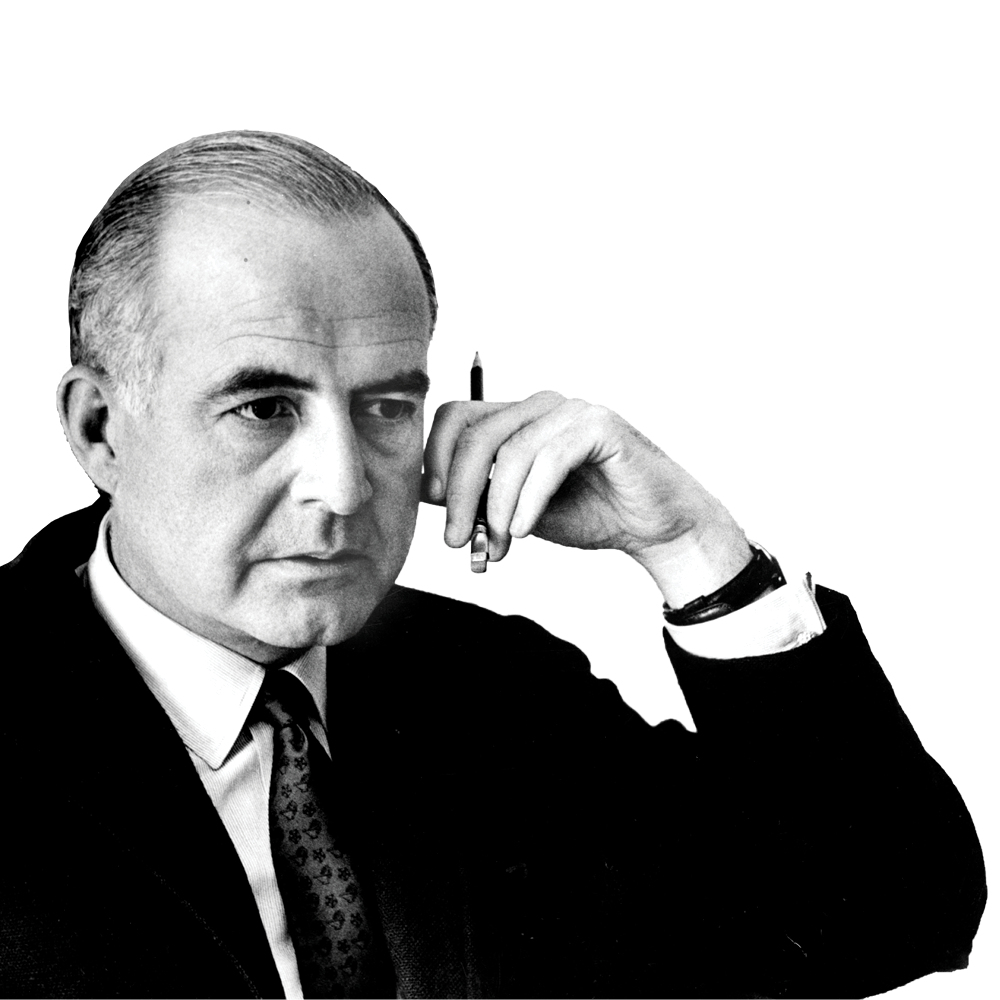
Born on March 9, 1910, in West Chester, Pennsylvania; Died on January 23, 1981, in New York City
Medea’s Meditation and Dance of Vengeance, Opus 23a
Composed: 1955, based on the ballet from 1945-46
Estimated length: 12 minutes
Dedicated to the pioneering choreographer Martha Graham, Samuel Barber’s ballet based on the ancient mythic figure of Medea was composed in 1945-46 and contains some of the iconic American composer’s most incisive orchestral writing.
Medea’s Meditation and Dance of Vengeance distills the full-length ballet, which was titled Cave of the Heart, into a single-movement concert piece. In the ballet, Barber sought to bring a modern psychological perspective to the Greek myth of Medea, a sorceress whose betrayal by her husband Jason drives her to exact horrific vengeance.
The ballet—choreographed by Martha Graham, who also performed the role of Medea—was scored in nine movements for chamber ensemble. Barber later reworked the score into a seven-movement concert suite for full orchestra, tracing “the form of a Greek tragedy” while emphasizing the degeneration of Medea’s love into all-consuming obsession. Nearly a decade after the 1946 premiere, he narrowed his focus to Medea herself in Medea’s Meditation and Dance of Vengeance, a work about half the length of the suite but drawing on an even larger palette of orchestral colors.
Barber has often been pigeonholed as a conservative neo-Romantic composer with a strong gift for lyricism, out of step with the postwar turn toward modernism, particularly in academic and critical circles. Yet his music for Medea suggests a wider expressive range, representing “a major stylistic leap,” according to biographer Barbara Heyman, who describes it as “more focused and strident in tone” and suggests that Barber was eager to break away from that image.
WHAT TO LISTEN FOR
The piece draws together several facets of Medea’s character, beginning with a suspenseful motif on xylophone against uneasy string harmonies. The Meditation’s slow music touches on her “tender feelings towards her children,” as Barber notes, with delicate woodwind melodies and a glistening violin theme suggesting a love that becomes twisted into its opposite.
Persistent patterns begin to take hold, and the music turns more menacing, marked by pauses and the reappearance of earlier ideas. In Euripides’ tragedy—a passage Barber inscribes in the score—Medea urges herself to “go forward to the dreadful act.”
Barber makes this progression vivid through shifting instrumental colors: the English horn’s lament set against chords in piano and harp, alongside the snare drum’s impatient summons. As the tempo accelerates, brief climaxes heighten the tension.
The Dance builds from a nervous rhythmic pattern in the piano into an all-consuming surge of energy, recalling something of the violent intensity of Stravinsky’s Rite of Spring. Just as the music seems to subside, Barber drives the orchestra into a final frenzied outburst.
Scored for 3 flutes (3rd doubling piccolo), 2 oboes, English horn, 2 clarinets, E-flat clarinet, bass clarinet, 2 bassoons, contrabassoon, 4 horns, 3 trumpets, 3 trombones, tuba, timpani, 3 percussion players, harp, piano, and strings.
− Thomas May is the Nashville Symphony's program annotator.




 Back