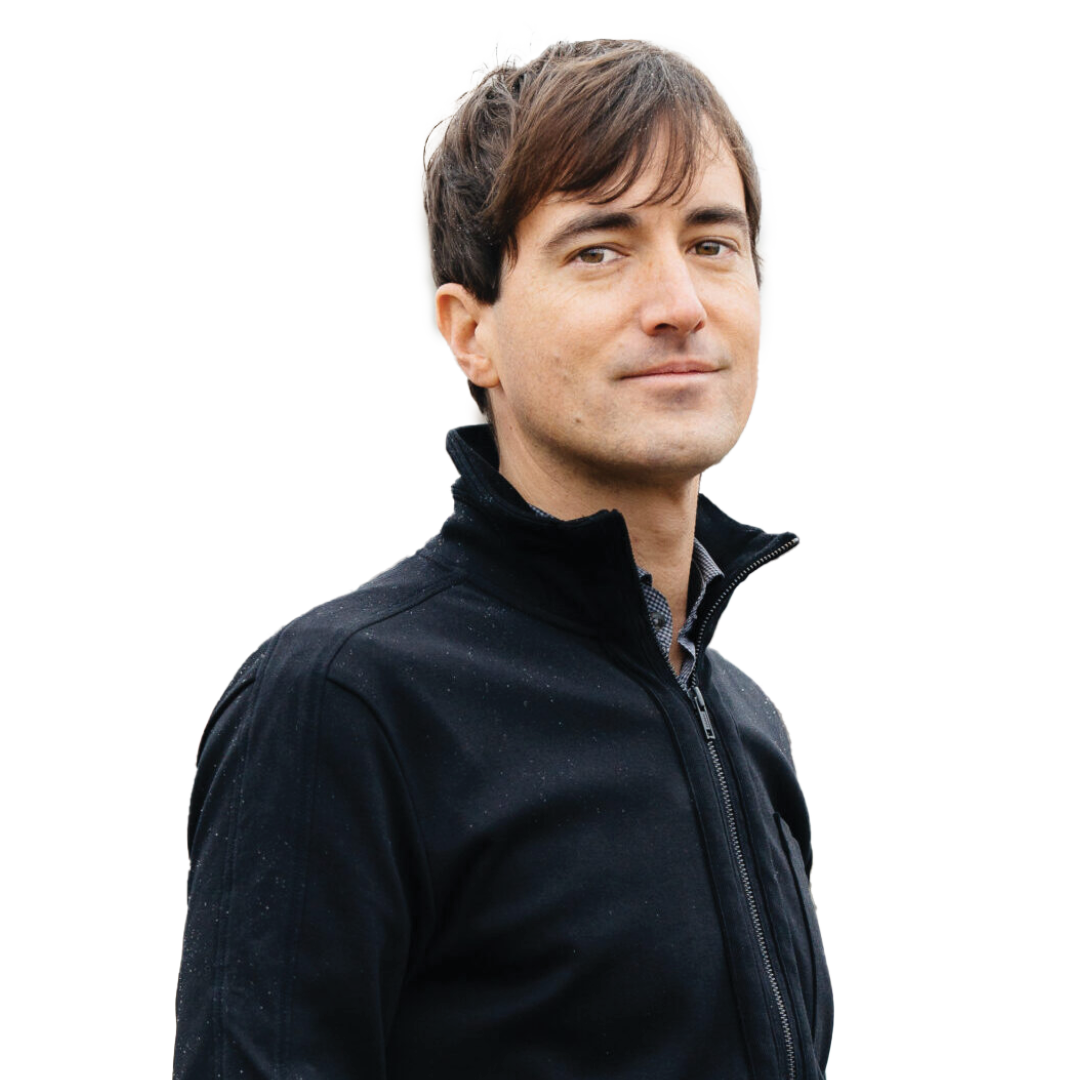
Born on January 23, 1977 in Philadelphia, Pennsylvania; He currently resides in Burlingame, California.
Passage for mezzo-soprano, orchestra & laptop
Composed: 2017
Estimated length: 20 minutes
One of the most widely performed American composers of his generation, Mason Bates is familiar to Nashville audiences. In 2024, the Nashville Symphony performed his Nomad Concerto for violin and orchestra, written for Gil Shaham—part of an ongoing collaboration that continues with these performances. Whether writing for the opera stage, the concert hall, or shaping a dance event through his DJ alter ego, Bates understands his creative role to be that of a storyteller.
Well before turning to opera, Bates had established a national reputation through major orchestral commissions and residencies. Across his work, he advances classical traditions into a contemporary, technologically informed idiom that speaks to the experiences of audiences in the digital age.
His debut full-length opera, The (R)evolution of Steve Jobs, premiered in 2017 and went on to win a Grammy® Award for Best Opera Recording. More recently, his opera The Amazing Adventures of Kavalier & Clay—based on Michael Chabon’s Pulitzer Prize–winning novel—opened the Metropolitan Opera’s current season to notable acclaim, further extending his presence on the national stage.
He has served as composer-in-residence with major American orchestras and, from 2015 to 2020, was the inaugural composer-in-residence at the John F. Kennedy Center for the Performing Arts—an institution founded in the spirit of President Kennedy’s conviction that the arts are vital to the life of a nation. During his residency there, Bates found inspiration in the visions of both JFK and Walt Whitman for Passage, scored for orchestra and mezzo-soprano.
The work interweaves excerpts from Whitman’s “Passage to India,” later incorporated into Leaves of Grass, with clips from Kennedy’s speeches about the American space program—most prominently the May 25, 1961 address to Congress announcing the “Moonshot.” Bates became fascinated by the idea of bringing together “two voices from totally different perspectives, but both looking into the heavens.”
Whitman addresses the planet as a “vast Rondure, swimming in space,” while JFK frames space travel as a national aspiration. Though Kennedy never references Whitman directly, Bates discovered resonant echoes between poet and president. Together, the interwoven texts depict “Whitman looking at American exploration as an important element in our nation’s consciousness and JFK’s speeches about accomplishing this aspirational mission.” Musically, he extends that idea: “The ghost of JFK echoes behind the soloist’s voice, trailing her throughout the piece—with a moment in the middle where they come together.”
Bates had previously incorporated samples from the first American spacewalk into his 2009 work The B-Sides, but here the recorded presidential voice becomes an expressive partner to the soloist. For the vocal writing, he focused on the warmth and depth of the mezzo-soprano register, treating the piece almost like a concerto for voice.
Whitman’s imagery of travel and forward motion animates much of the score. There is considerable word painting throughout—for example, bustling rhythms in the strings that place us inside a train crossing the American plains. Surging gestures suggest steamships and medieval navigators. At the center, Whitman’s vision of the “vast Rondure” and JFK’s invocation of the unknown converge in an ambient passage of ethereal chords, capturing a shared sense of awe.
“The orchestra is a great medium for exploring big topics,” Bates has said. “In the face of the intractable issues we face today, whether climate change or social inequity, it’s inspiring to me to see how JFK approached a pressing issue and said, ‘Let’s do it! Let’s go to the moon!’ And we did it.” In Passage, poetry and presidential rhetoric intertwine in a meditation on aspiration—and on the enduring impulse to look beyond the horizon.
WHAT TO LISTEN FOR
The work unfolds in a single, continuous span, opening in a hushed, “dreamy, blurry” atmosphere before gathering momentum. Notice how the mezzo-soprano’s lyrical setting of Whitman contrasts with—and at times overlaps—the archival recordings of JFK’s voice, creating an echo across time.
As the text turns to images of travel and connection—railroads, steamships, the spanning of oceans—the orchestra becomes more propulsive, with bustling rhythms and bright percussion suggesting motion and forward drive. Midway through, an expansive, suspended section evokes the vastness both Whitman and Kennedy contemplate. The piece culminates in a surge of orchestral brilliance, with ringing brass and heightened energy underscoring the shared sense
of aspiration.
Scored for 3 flutes (2nd doubling piccolo), 2 oboes (2nd doubling English horn), 2 clarinets in A, 2 bassoons (2nd doubling contrabassoon), 4 horns in F, 3 trumpets in C, 2 trombones, bass trombone, tuba, 3 percussionists, laptop, harp, piano/celesta, strings, and solo mezzo-soprano.
− Thomas May is the Nashville Symphony's program annotator.




 Back