Born on March 2, 1824 in Litomysl, Czechia; Died on May 12, 1884 in Prague, Czechia.
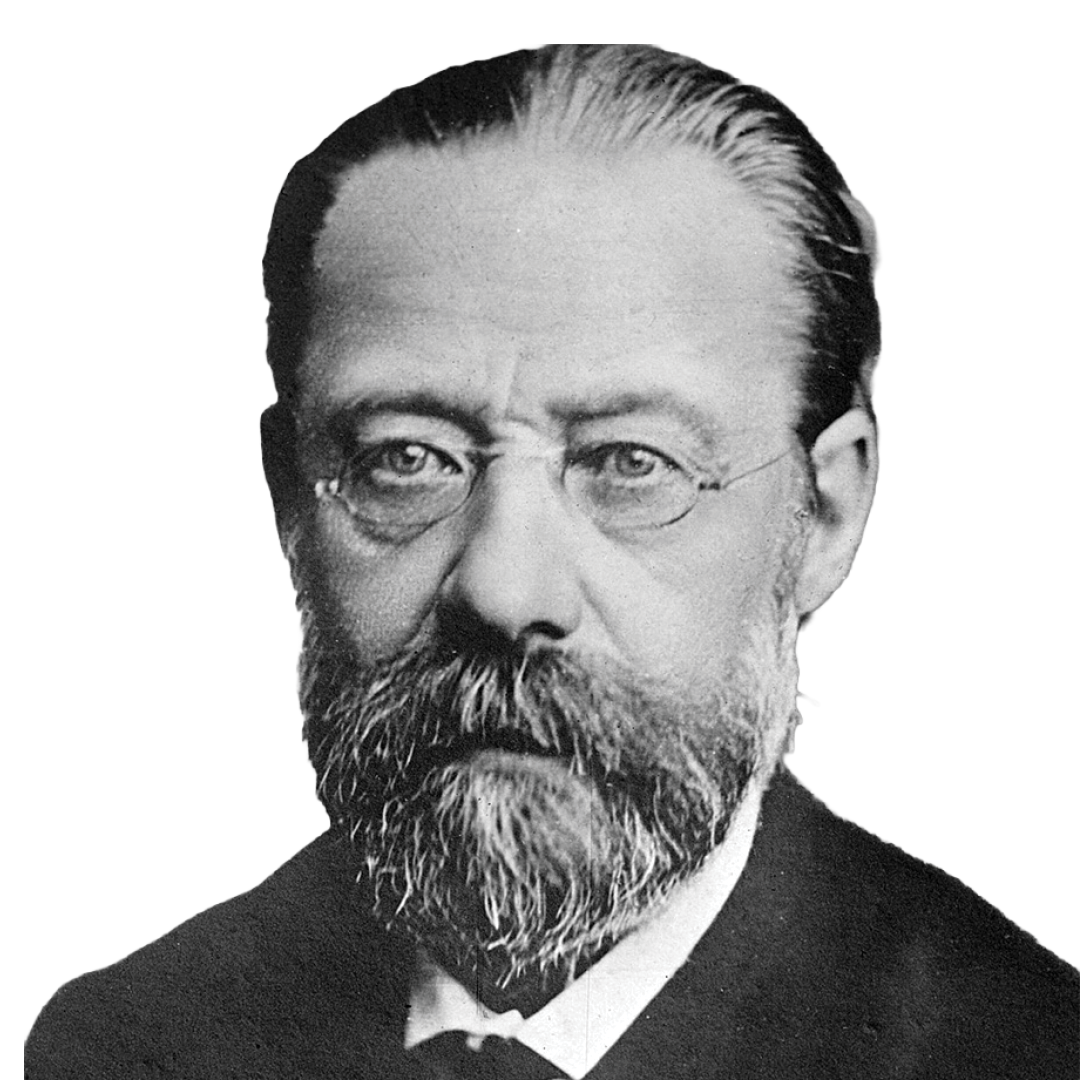
Vltava (“The Moldau”) from Má vlast
Composed: 1874
First Performance: 1875
Last Nashville Symphony performance: January 13, 2019
Estimated length: 12 minutes
Bedřich Smetana’s Vltava—also widely known as The Moldau, which is taken from the German name for the river that winds through the Bohemian countryside and Prague—is the best-known part of his six-work cycle Má vlast (My Homeland).
Smetana began composing the work in 1874, at a difficult turning point in his life. That summer he began experiencing an ominous ringing in his ears, marking the rapid onset of the deafness that soon forced him to resign from his position as principal conductor at Prague’s Provisional Theater. Already established as a pioneer of a distinctively Czech musical language, especially through his works for the stage, he now turned increasingly toward orchestral composition. Vltava became the second part of Má vlast, whose six tone poems he completed over the next several years.
Smetana supplied his own description of the river’s journey. It begins at the Vltava’s source, where “two brooks, one cold, the other warm, join a stream,” as he observed during a trip in 1867. From there, his program follows the river through the Bohemian countryside toward Prague, combining natural scenery with depictions of village life, history, and legend.
What To Listen For
Smetana’s two small streams are suggested at the opening before they gradually merge into the broad, flowing melody associated with the Vltava itself. That melody returns as the scenery changes along the river’s course, providing a recognizable thread through the journey.
The music becomes livelier as the river passes a peasant wedding, then enters the moonlit world Smetana describes, where “mermaids dance” and ruined castles loom above the riverbanks. Later the current turns more turbulent at the St. John Rapids, a rough stretch of the Vltava south of Prague. The river finally widens as it approaches the capital and passes Vyšehrad, the historic fortress overlooking the Vltava—one of Prague’s most famous landmarks—before continuing toward its eventual meeting with the Elbe.
Scored for piccolo, 2 flutes, 2 oboes, 2 clarinets, 2 bassoons, 4 horns, 2 trumpets, 3 trombones, tuba, timpani, triangle, cymbals, bass drum, harp, and strings
− Thomas May is the Nashville Symphony's program annotator.




 Back