Born on February 8, 1932, in Flushing, Queens, New York City; Currently resides in Los Angeles, California
Concerto for Tuba and Orchestra
Allegro Moderato
Andante
Allegro molto
Composed: 1985
First Performance: 1985
Nashville Symphony Premiere
Estimated length: 20 minutes
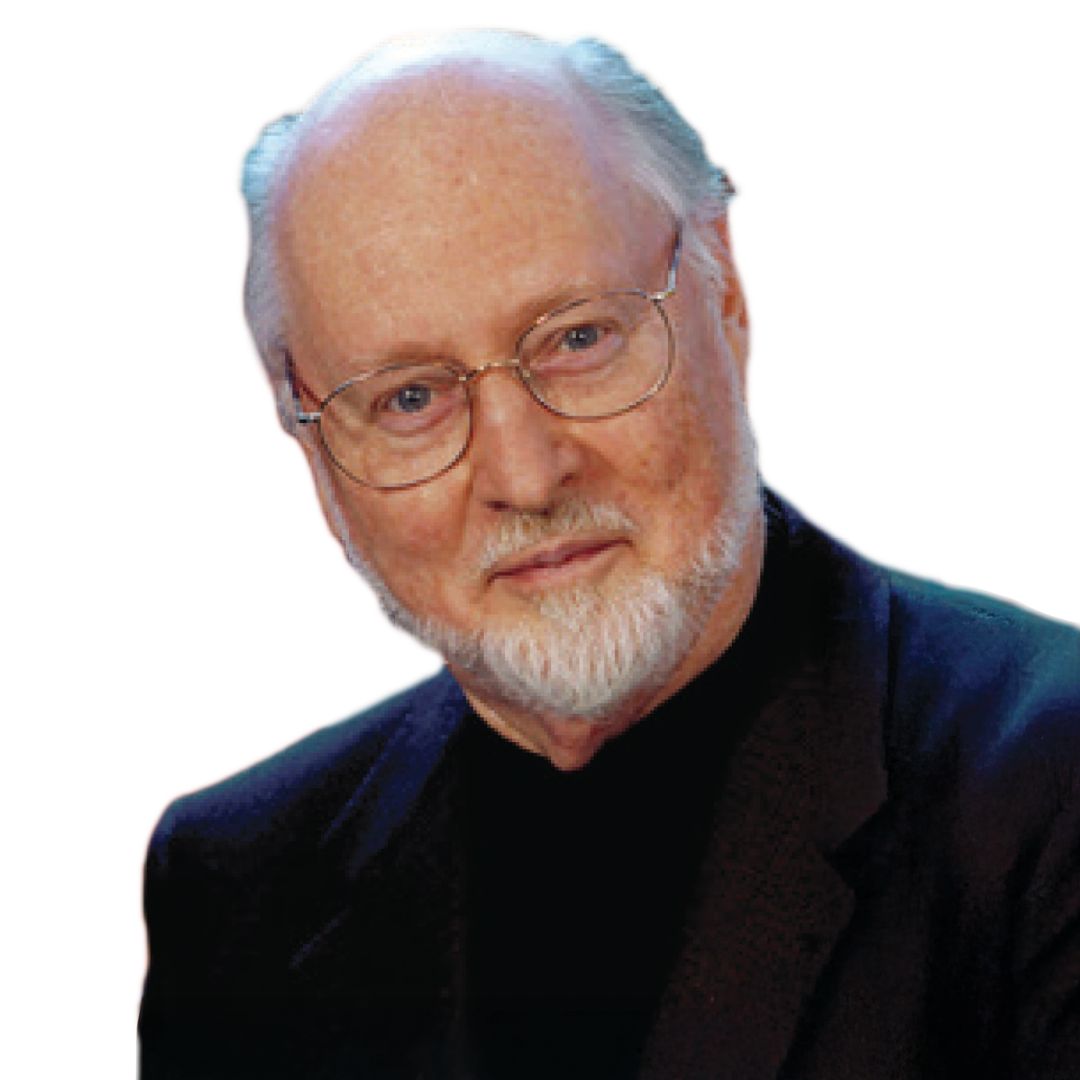
John Williams’s music has become part of the soundtrack of modern American life. His scores for Star Wars, Jaws, E.T., the Indiana Jones and Harry Potter films, Schindler’s List, and many others have made him one of the most widely recognized composers of his generation. Yet his career has never been confined to the movie studio. Alongside more than 100 film scores and extensive work for television, Williams has built a substantial catalogue of concert music and has enjoyed a long career as a conductor.
Music surrounded him from childhood. His father was a percussionist with the Raymond Scott Quintette, and jazz formed part of Williams’s early musical environment. After studying in Los Angeles and serving as a conductor and arranger for the U.S. Air Force, he continued his training at Juilliard while earning money as a jazz pianist in New York nightclubs.
Williams’s closest institutional relationship in the concert world has been with the Boston Pops Orchestra, which he led as music director and later served as laureate conductor. Concertos occupy an important place in his concert catalogue, often inspired by particular performers and instruments. The Tuba Concerto grew directly from that Boston connection: Williams composed it in 1985 for the 100th anniversary of the Boston Pops which he was then serving as music director. The work was composed for Chester Schmitz, principal tubist of the Boston Symphony Orchestra and Boston Pops, and Williams conducted its premiere.
WHAT TO LISTEN FOR
Williams connects the concerto’s three movements without any pauses. The soloist enters almost immediately in the first movement against what the composer describes as a “gently rocking pulse” in the strings, harp, and upper woodwinds. The tuba’s first idea is passed to other instruments before the soloist introduces another theme and moves into increasingly elaborate music. Unusually, the cadenza—a passage normally reserved for the soloist alone—is accompanied here by all four horns.
The English horn opens the slow second movement with a line that becomes increasingly decorated before passing to the flute. Williams sets up a brief conversation between tuba and flute, followed by a section in which the soloist plays syncopated figures against a steady orchestral beat. The opening melody eventually returns, with tuba, English horn, and flute gradually receding as the strings hold a quiet chord above them.
The brass establish the momentum that drives the finale. Williams alternates passages for the full orchestra with thinned-out textures—such as a dialogue in which the tuba trades short phrases with the harp while the strings add crisp plucked notes underneath. Woodwinds and trumpets increasingly come to the fore, adding brightness and energy. After a last exchange between tuba and harp, the entire orchestra takes over and closes the concerto on an exuberant note.
Scored for solo tuba, 3 flutes (3rd doubling piccolo), 2 oboes, English horn, 2 clarinets, 2 bassoons, 4 horns, 3 trumpets, 2 trombones, timpani, 3 percussionists, harp, piano/celesta and strings
− Thomas May is the Nashville Symphony's program annotator.




 Back