Born on December 16, 1770, in Bonn (now part of Germany); died on March 26, 1827, in Vienna
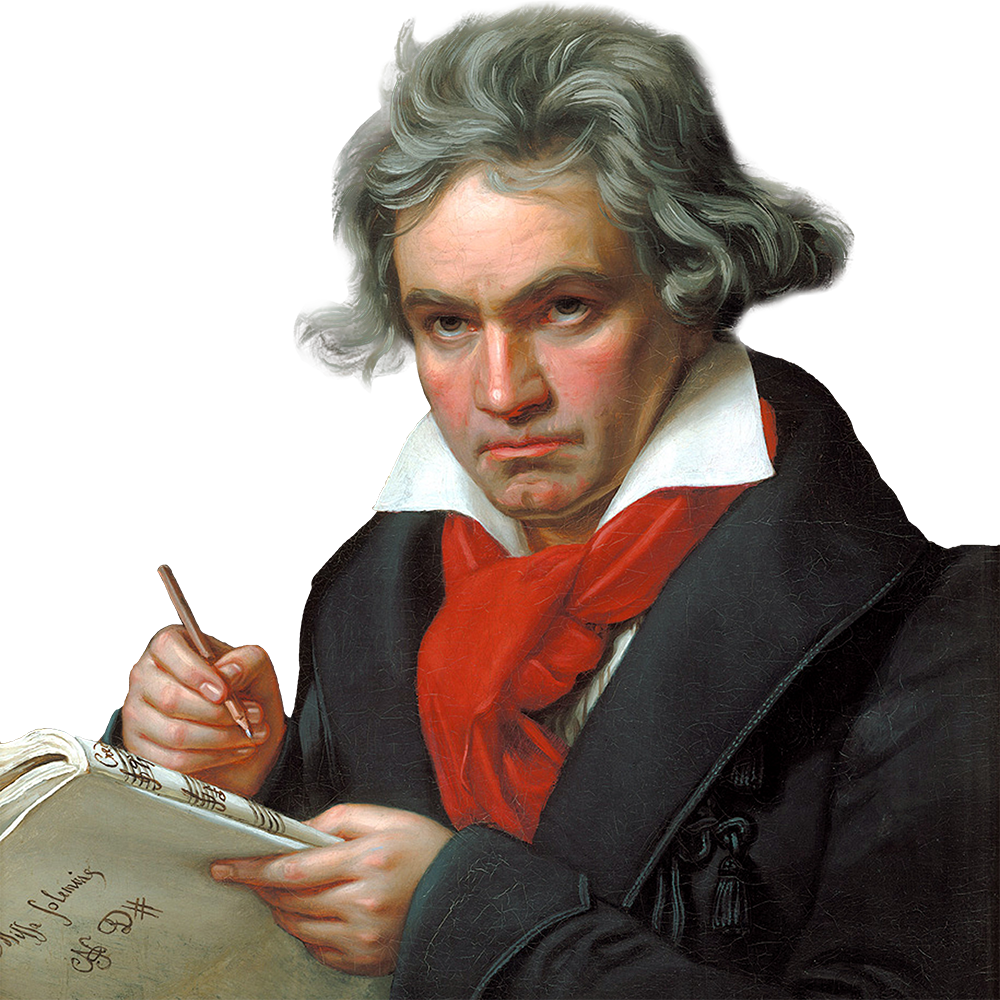
Overture to Coriolan, Op. 62
Composed: 1807
Estimated length: 8 minutes
Beethoven wrote only one opera, but he was a profoundly dramatic composer. Even without words, he could evoke confrontation and psychological struggle. The Coriolan Overture, composed in early 1807 while Beethoven was also working on the Fifth Symphony, shares that work’s key of C minor. It is one of the most concentrated examples of his dramatic instinct.
Heinrich Joseph von Collin’s 1802 play Coriolan was ideal for a composer drawn to situations of conflict. Collin, an Austrian dramatist and poet, treats the same ancient Roman figure as Shakespeare’s Coriolanus, though his version of the story differs substantially. Beethoven later considered collaborating with Collin on an operatic version of Macbeth, but the project never materialized.
In Collin’s play, the war hero Coriolan joins Rome’s enemies in pursuit of revenge after he is exiled from the city. But his resolve begins to falter when his mother Volumnia and his wife plead with him to spare Rome; unable to reconcile those demands, he takes his own life. The overture compresses the essence of this drama into a single orchestral movement; Beethoven supplied no additional incidental music for the play. Its first performance came at an ambitious private concert that also included the world premieres of his Fourth Symphony and Fourth Piano Concerto.
WHAT TO LISTEN FOR
Beethoven compresses the drama into two sharply contrasting musical ideas. The first opens the overture as a call-and-response between a sustained C on the strings and forceful chords from the full orchestra, then develops into agitated idea associated with Coriolan’s stubborn determination. Volumnia’s plea for mercy is represented by a gentler, more lyrical melody. Beethoven repeatedly brings these musical characters into confrontation.
Beethoven “did not always insist on joyful conclusions,” notes biographer Maynard Solomon. The ending of this overture is Exhibit A. In the final moments, the music loses force and begins to fragment. Coriolan’s agitated theme can no longer sustain its earlier momentum; the texture thins and the overture breaks apart in terse dying gestures.
Scored for pairs of flutes, oboes, clarinets, bassoons, horns, and trumpets; timpani; and strings
− Thomas May is the Nashville Symphony's program annotator.
Featured on Rachmaninoff & Mehldau — September 25 & 26, 2026
Nashville Symphony
Kevin John Edusei, conductor
Brad Mehldau, piano



 Back
Back