Born on December 16, 1770, in Bonn (now part of Germany); died on March 26, 1827, in Vienna
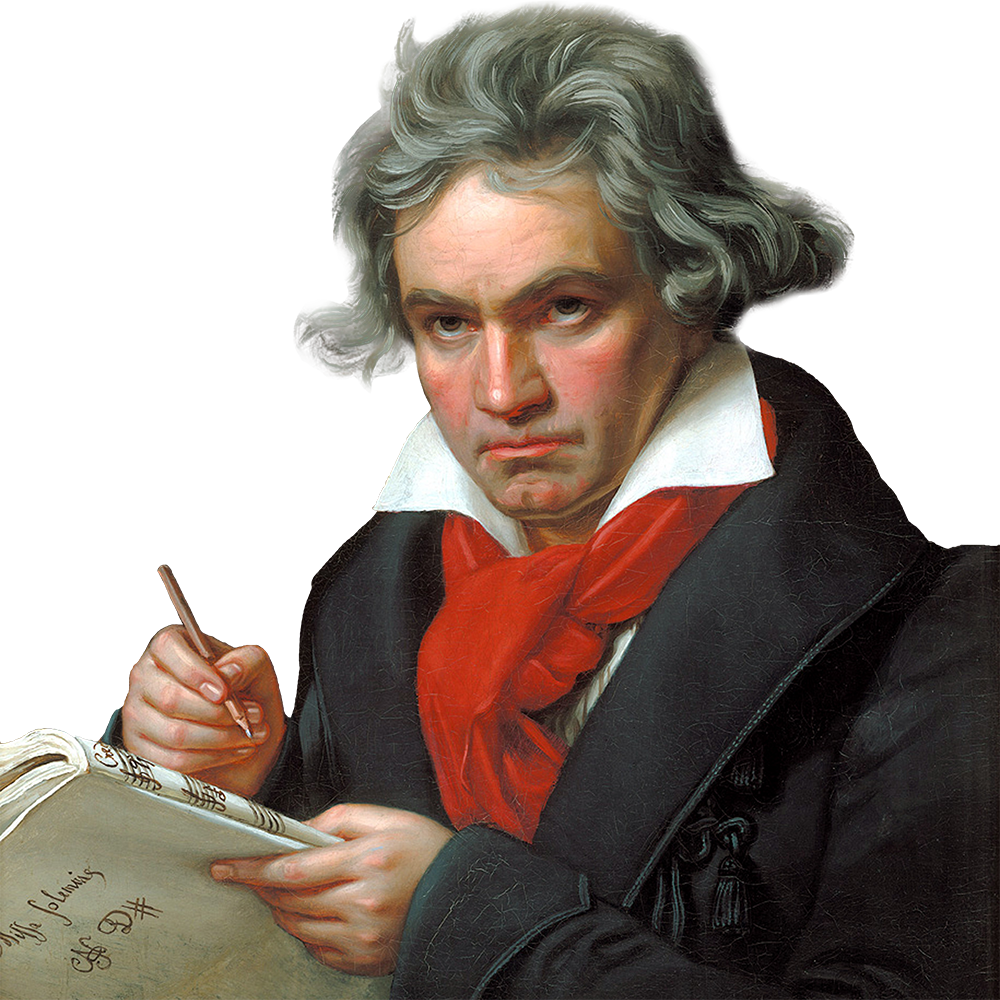
Egmont Overture
Composed: 1809-10
Estimated length: 9 minutes
Beethoven returned again and again to stories in which darkness is met—and defeated—by the force of human courage. Fidelio, the Fifth Symphony, the Ninth: each imagines a world reshaped by moral resolve. His overture to Johann Wolfgang von Goethe’s tragedy Egmont, written in 1809, belongs to this same family.
Vienna had just endured another assault by Napoleon’s army, and Beethoven was commissioned by the Burgtheater to write music for a new production of Goethe’s stage work. He produced a score of incidental pieces to surround the spoken play; of these, the overture, which itself contains a compact drama of resistance and sacrifice, has survived as a concert staple.
Goethe’s Egmont, completed in 1788 on the eve of the French Revolution, looks back to the Spanish occupation of the Low Countries. The historical Count Egmont, a nobleman who opposed Spanish tyranny and became a symbol of political conscience. In the play, he is imprisoned and condemned as a traitor; unlike Beethoven’s later hero Florestan in Fidelio, Egmont cannot be rescued. His beloved Klärchen takes her own life, and he meets death with clear-eyed defiance. For Beethoven, who had famously torn up his dedication to Napoleon after the general crowned himself emperor, this was not just a historical tragedy but a parable of political and personal integrity. He also took pride in his own Flemish roots, which may have deepened his feeling for Egmont’s cause.
WHAT TO LISTEN FOR
The overture traces the outlines of this story with gripping clarity. It opens in shadow: a slow introduction built from stern, implacable rhythms and grieving phrases, a portrait of a people under domination. A tentative glimmer of hope appears but is quickly swallowed by gathering tension. When the fast-paced section finally breaks free, it does so with Beethoven’s unmistakable fire. Launched by the cellos, the main theme is soon intensified by the full orchestra. It carries a sense of striving that feels almost physical. Surges of energy collide with memories of the opening’s oppressive gesture, as if resistance is continually tested.
Then comes a jolt: a sudden halt, a cry from the violins, and a breath-catching silence. Egmont’s fate is sealed. But Beethoven refuses to end in despair. The overture’s final pages erupt in a major-key blaze—a musical vision of posthumous victory, driven by martial rhythms and bright flashes of piccolo and drums. In this triumph, Beethoven lets the hero’s ideals outlive the man himself.
Scored for 2 flutes (2nd doubling piccolo), 2 oboes, 2 clarinets, 2 bassoons, 4 horns, 2 trumpets, timpani, and strings.
− Thomas May is the Nashville Symphony's program annotator.
Featured on Mozart's Jupiter Symphony — January 9 & 10, 2026.
Nashville Symphony
Gemma New, conductor
Conrad Tao, piano




 Back