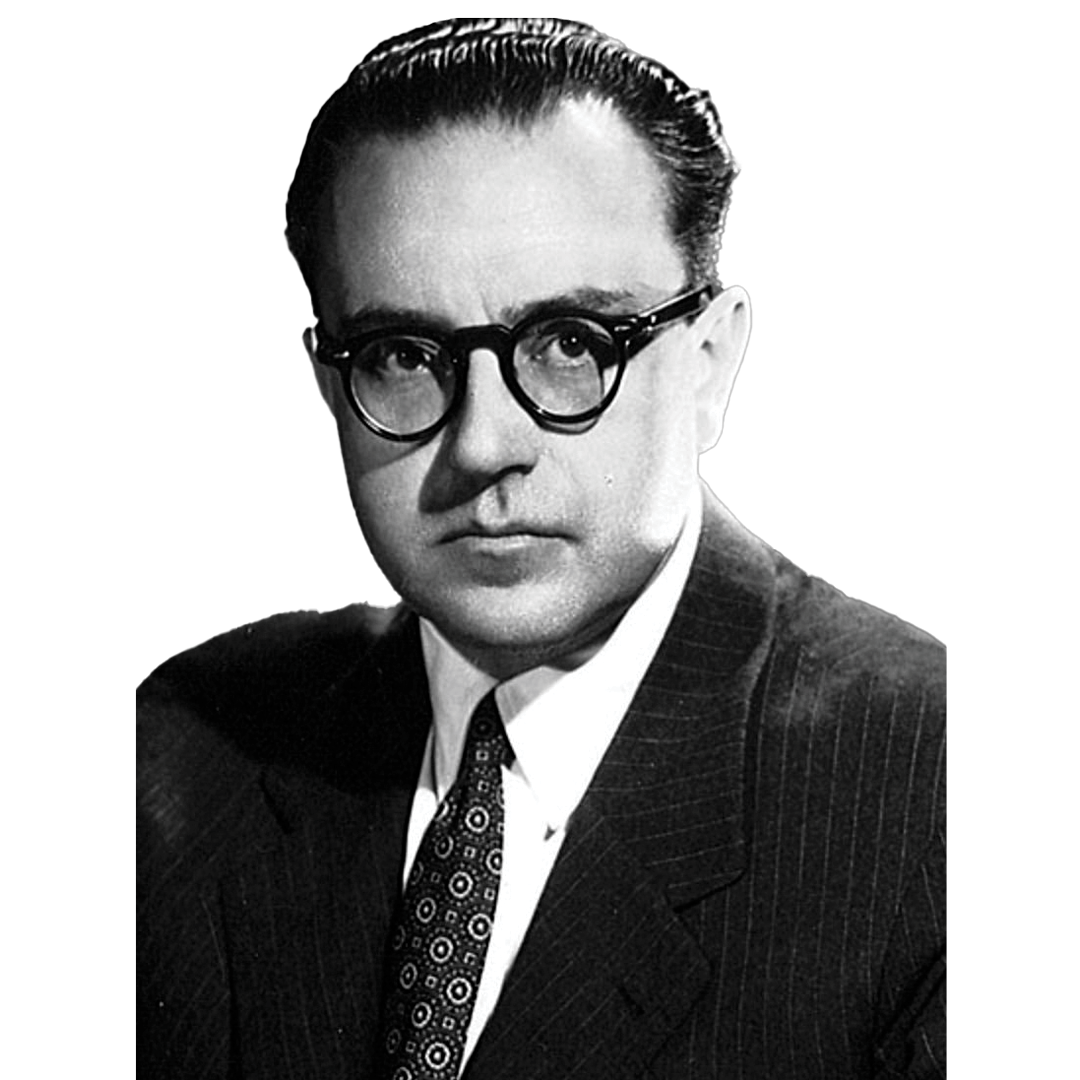
Born on April 11, 1916, in Buenos Aires, Argentina; Died on June 25, 1983 in Geneva, Switzerland.
Four Dances from Estancia
Composed: The ballet was completed in 1941, assembling the concert suite in 1943
Estimated length: 12 minutes
Born in Buenos Aires in 1916, Alberto Ginastera became renowned for blending South American folk traditions with European modernism. Estancia (“Ranch”) comes from the first phase of his career, when he focused on the musical heritage of his native Argentina. Even as a conservatory student, Ginastera gained attention with his ballet Panambí, which drew on Amerindian sources.
During a 1941 tour of South America, Lincoln Kirstein—co-founder of the “American Ballet Caravan,” a forerunner of New York City Ballet—was so impressed by Panambí that he commissioned Ginastera to create a new ballet evoking “Argentine country life.” The company had recently staged Aaron Copland’s Billy the Kid and wanted a counterpart celebrating South American culture. (Ginastera later studied with Copland, and the two developed a lifelong friendship.)
Ginastera found inspiration for Estancia, composed at age 25, in José Hernández’s 19th-century epic poem Martín Fierro. The one-act ballet unfolds over a single day, celebrating the vitality of gaucho life on the pampas. Its simple plot follows a young man from the city who falls in love with a rancher’s daughter. Initially rejected, he proves himself by outdancing the local gauchos in a climactic display of strength and skill.
The American Ballet Caravan dissolved before Estancia could be staged, so Ginastera salvaged four dances as a suite. The Buenos Aires premiere in 1943 was a triumph, and the complete ballet was finally performed in 1952. These four dances have since become Ginastera’s most frequently performed orchestral music.
WHAT TO LISTEN FOR
The opening dance, Los trabajadores agrícolas (“The Land Workers”), uses driving rhythms and vivid orchestration to evoke physical strength and endurance. By contrast, Danza del trigo (“Wheat Dance”) offers a tender, sun-drenched homage to the vast, shimmering pampas. In Los peones de hacienda (“The Cattlemen”), pounding percussion and brass generate raw, elemental power, even more intense than the opening dance.
The suite ends with the exuberant Danza final, drawn from the ballet’s climactic scene. This malambo — a traditional, fiercely competitive male dance — builds to a whirlwind of sound, with trumpets and percussion driving the energy ever higher. Ginastera’s finale brims with rhythmic vitality, virtually daring listeners to keep their toes still.
Scored for 2 piccolos, 2 flutes, 2 oboes, 2 clarinets, 2 bassoons, 4 horns, 2 trumpets, timpani, percussion, piano, and strings.
− Thomas May is the Nashville Symphony's program annotator.




 Back